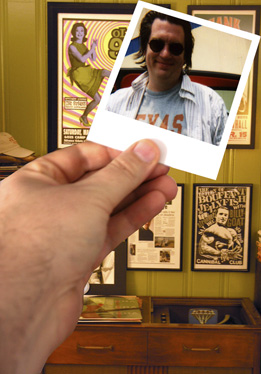
We are talking now of summer evenings in Knoxville, Tennessee in the time that I lived there so successfully disguised to myself as a child.
So begins one of my favorite book, "A Death in the Family," by James Agee, winner of the Pulitzer Prize for fiction in 1958. Agee was a tortured genius haunted by the death of his father when James was 6, and this novel, published posthumously after his death of a heart attack at age 45 in 1955, is the work of a writer in peak form.
Or so I thought. I read today in The New York Times of a "restoration" of Agee's work to it's original form.
When Agee died, he left a hand scribbled manuscript of a novel that was almost finished. The handwriting was "so crabbed that psychics should have been called in to decode it." David McDowell, Agee’s protégé and literary executor, cobbled together the version of the book that is known and loved today, a lyrical autobiographical account of Agee’s first six and a half years, ending with the death of his beloved father in a car crash.
Scholar Michael A. Lofaro spent years shuffling through the original manuscript to create "A Death in the Family: A Restoration of the Author’s Text," by "tracking down the variants, squinting at Agee’s gnarled handwriting, deciphering illegibilities, comparing drafts, speculating, emendating, annotating — and when it comes to his predecessor McDowell’s version, lacerating."
But was Lofaro able to improve on the original? Will Blythe, writing for The Times says yes:
"At last we have 'A Death in the Family' that appears closer to the author’s original intention. This tidying is good in its own right, but the main reason to celebrate the publication of this version is that it serves as a fresh reminder of the wondrous nature of Agee’s prose — unabashedly poetic, sacramental in its embrace of reality, and rhythmical as rain on a Tennessee tin roof."
I would like to heartily add an "amen" to the previous statement. Even without the novel, Agee would have been remembered for any of his many accomplishments. He was an accomplished poet and a well-regarded journalist who worked for Fortune and time Time in the 1930s. He may be best remembered for his collaboration with the great photographer Walker Evans on their book about the plight of Southern sharecroppers, "Let Us Now Praise Famous Men," but he is also considered the father of American film criticism, which he defined in his book, "Agee on Film." And, if that wasn't enough, he was the credited screenwriter on two classic films, "The African Queen" and "The Night of the Hunter."
I can't wait to read the new version of this old favorite. If you haven't spent time with Agee, seek out his work at the bookstore or library. Or even spend a moment with this overview from The New Yorker. He is an American original worth remembering.
Sunday, June 15, 2008
"A Death in the Family" Revisited

Thursday, March 20, 2008
Ernie Pyle's Last Byline
 My old friend Mo Stevenson, who I have written about previously, once told me a story about how he came to know Ernest Hemingway back in July 1944. Gen. Raymond O. Barton, commander of the Fourth Infantry Division during the Normandy campaign, called him to his tent one day and asked him if he knew any war correspondents. Stevenson replied, “I know the good ones.” And that’s how Mo ended up riding into Paris with Hemingway a few weeks later.
But the Ernie who was at the top of Mo’s list wasn’t Hemingway. It was Ernie Pyle.
As an old newspaperman and World War II history buff, I have found myself more interested in the past couple of years in going back to the first-hand accounts of the newspapermen (and women) who covered the war.
Some of this fascination came from reading the excellent two-volume set of World War II reportage from Library of America where the reporting of Robert Sherrod, Lee Miller, A.J. Liebling, Mack Morris and Carl Mydans still crackles like rifle fire.
But as great as some of this work is, the work of Ernie Pyle still exists on a different plateau.
Pyle’s ability to tell the stories of ordinary people and capture small moments allowed millions of American readers to understand the war in a different way. The headlines might show readers the movements of armies as giant arrows on a map, but Pyle put you inside the thoughts of the soldier in the foxhole in the rain. The human-scale portraits he painted with his words helped his readers catch a glimpse they could never understand without actually living it.
One example of this is his story of Omaha Beach. If you’ve seen the movie Saving Private Ryan, you know what happened. But although Pyle spent more than his share of time under fire, he wasn’t there on D-Day for that horror. Instead, he wrote a story a few days later about walking down the beach in the midst of the detritus of war. His words bring home the magnitude of the loss in an understated, dignified manner.
It wasn’t the destroyed landing craft or the burned out tanks he wrote about, it was personal affects that washed ashore, “this long thin line of personal anguish” as he called it. It was backpacks, Bibles, shaving kits and snapshots. It was tennis racket. It was a dog looking for its master.
Pyle writes:
“I stepped over the form of one youngster whom I thought dead. But when I looked down I saw he was only sleeping. He was very young and very tired. He lay on one elbow, his hand suspended in the air about six inches from the ground. And in the palm of his hand he held a large, smooth rock.
“I stood and looked at his for long time. He seemed in his sleep to hold that rock lovingly, as though it were his last link with a vanishing world. I have no idea at all why he went to sleep with that rock in his hand, or what kept him from dropping it once he was asleep. It was just one of those things without explanation, that a person remembers for a long time.”
That kind of writing, that kind of empathy earned the appreciation of millions of readers and the affection of the soldier whose stories he told. He shared their dangers and seemed to understand their lives. I understand that sense affinity for the man and his writing because I still feel it today some 60 years later.
That’s why I had mixed feelings about the publication earlier this month of the photograph of the dead Ernie Pyle stretched out on the volcanic rock of a little island off Okinawa where he was killed. Although it was thought that the photo had never been published, it actually had been in 1979. Nonetheless, it was a shocking photo. If you want to see it, go to USAToday
Is this exploitation? Is this sensationalism? Do we really need to see this picture?
I’ve pondered this question for a while. What I have wondered is what this photo tells us about the man. How a person dies doesn’t always tell us anything about the way they lived. But in this case, I believe it does.
Pyle spent the war years reflecting the world he experienced. He wrote often about violent death coming suddenly and unexpectedly to those around him. Pyle knew you couldn’t write about the war and not write about the price that soldiers pay. He probably did that most eloquently in his column “The Death of Captain Waskow.”
In that column, he wrote, “You feel small in the presence of dead men, and ashamed at being alive, and you don't ask silly questions.” I feel a little of that when I look at that photo of Ernie Pyle. For a man who sought to tell the stories of Americans at war, you have to be able to tell The Story of war – people die. Pyle didn’t learn these stories from a distance. He learned them from close up.
One of Pyle’s colleagues – the great combat photographer Robert Capa touched on this in his memoir Slightly Out of Focus. As he was taking a picture of a wounded pilot crawling out of his damaged bomber at an airfield in England, the pilot held the gash in his forehead and cried, “Are these the pictures you were waiting for, photographer?”
Capa was stung by this. “On the train to London, with those successfully exposed rolls in my bag, I hated myself and my profession. This sort of photography was for undertakers, and I didn’t like being one. If I was to share in the funeral, I swore, I would have to share the procession.”
Capa certainly took part in the procession, and so did Pyle. And I think that is part of what this picture of Pyle shows. You do not see a reporter, you see a soldier.
Also, this man is not an anonymous victim of war. When you read this man’s writing today, the words are still living. His thoughts and observations are as real as something that happened this afternoon. And this photograph serves to magnify the tragedy.
Ernie Pyle was very much an everyman – a quiet, unassuming regular guy, a bit of a loner. He hated the war as much as any soldier he wrote about but understood that there was a job to do. When he left Europe at the end of 1944 to go home to Albuquerque, N.M., he could have stayed there. He didn’t have to go back out to the war, but he did. Maybe it was a sense of duty, a longing to escape a less than happy marriage or his innate restlessness. Whatever it was, it led him to that little island off Okinawa where he met his end.
And maybe that is why this photo is necessary to see. We know Ernie Pyle. We can read his thoughts and we still find him to be a hell of a guy. This photo is his last byline and it helps to make the immense scope of tragedy much more real and personal.
To understand a little more about the man Ernie Pyle was, take a few moments to read this excellent look at his life before the war.
Monday, February 04, 2008
A Word About My Man PeteG

My good friend and West and Clear blogging colleague PeteG really gobsmacks me with his talent. Case in point -- the image above. I love the composition, but what really get me is the quality of the color -- the sky, the wall, the sand. The color is exquisite. And that's when Pete would say, "It's the light, man. It's all about the light."
In a word, awesomez.
Thursday, December 27, 2007
On the Front Line

When I saw the headline "Bhutto Assassinated," my heart sank. As if things we're going bad enough in an unstable country full of Islamic militants and nuclear weapons. Then I saw the photo of the blast above by my old UT classmate John Moore who I have written about before. My God, the danger.
John's a father and a husband, an all-around great guy who happens to have a job that takes him into harm's way on a regular basis so we Americans can see what is going on in the world. Thanks for your work, John. Please be safe.
UPDATE, 12.28.07: Listen to an interview with John on the NYT Web site.
Wednesday, December 05, 2007
Go See Allison in FW Today
If you have a chance, drop by the Neiman Marcus at Ridgmar Mall between 3 and 5 this afternoon and say hi to the Dallas photographer Allison V. Smith. She and her mom will be signing copies of their book, Reflection of a Man. Allison, a former S-T photog, is as cordial as she is talented. And the book is awesome, too.
Saturday, September 01, 2007
Boxcar Graffiti Art on The Circle
 Azle resident Michelle Winder makes a living as a conductor/brakeman for BNSF Railway. One day a few years back, she was passing through Manitou, Colorado and, while watching the graffiti-festooned cars pass by, inspiration struck. Now you can see her collection of railroad car graffiti art photos to the Heliotrope Gallery on Bluebonnet Circle. You can see her images at the gallery starting Monday, Sept. 4, through Saturday, Oct. 13.
You can check out her one-woman show titled “Out On A Rail” on Saturday, Sept.8, during Fort Worth’s annual Gallery Night, from 10 a.m. to 9 p.m.
Saturday, August 25, 2007
Close, But Not Quite
 Well, I thought this was the Fort Worth Sanger Brothers building, circa 1920s, but I can see upon closer inspection that it ain't. Still, it's kind of cool photo from an advertisement in the back of 1923 University of Texas Cactus yearbook. This one's for Kevin. Good luck with the move!
Thursday, August 02, 2007
A Long Time Ago

My Dad would have been 74 today. That's him with me and my brother in ... well, probably 1974. That's me on the right. Happy Birthday, Pop.
Friday, June 08, 2007
What Does Your Cat Do All Day?
 Ever wondered what your cat does all day when you aren't there? This guy did and decided to get to the bottom of it. He attached a spy camera to this cat's collar and recorded the results. For the record, I believe cats should be indoor creatures and I have a pretty good idea what my cat does all day: sleeps and continues his never-ending battle against his nemesis -- his rear feet.
Tuesday, June 05, 2007
Memorial Day 2007

UPDATE, 6.5.07: I found John Moore's blog item about this photo. Please take a moment to read it. It puts the photo into context and makes it even more raw and powerful (if that's possible). Also, Unfair Park's Robert Wilonsky weighs in on John: "He's a hell of a guy."
6.4.07: I missed this last week -- a photo from my old UT classmate John Moore that appeared in the New York Times. "Mary McHugh visited the grave of her fiancé, Sgt. James J. Regan, who was killed in Iraq in February. He is buried in the new Section 60 of Arlington National Cemetery for those killed in Iraq and Afghanistan."
Tuesday, April 17, 2007
Lou Chapman at Gallary 414

Another old S-T colleague, Lou Chapman, evidently is quite a photographer. I never knew! He's got an exhibit at Gallery 414 now through May 13.
Tuesday, April 10, 2007
Photography As Commodity

My friend Phil and I have this conversation all the time. Phil is an old school photographer, back from the days – and I say this without irony – when photographers used film. He laments how stock archives and digital photography have destroyed his craft.
As someone who appreciates photography as art, I’m inclined to agree with him. However, as an avid weekend photographer, I love my digital camera. And as a graphic designer, I love sites like iStockphoto that offer me low-cost stock photos a few clicks away. There’s the conundrum, I love the sausage but I hate how it’s made.
In this morning’s New York Times, this article shed a little bit of light on how we got here and where we are going with photography:
In some sense, the iconic photograph of Rosa Parks recreating her quiet act of rebellion on a bus in Montgomery, Ala., belongs to every American. But as a practical matter, it belongs to Bill Gates.
Anyone wanting to use that image in a book or on a Web site must first license it from Corbis, a corporation founded and owned by Mr. Gates, who is better known for starting Microsoft. The photo is among the 11 million prints and negatives in the legendary Bettmann archive, which Corbis bought in 1995.
Since that first purchase, Corbis has spent tens of millions of dollars acquiring image collections and other companies, hired more than 1,000 people and set up two dozen offices worldwide. Although Corbis says it brings in some $250 million a year in sales, it has yet to turn a profit.
Not making money? How is that possible?
What Corbis did not foresee was the rise of so-called microstock agencies like Fotolia and iStockPhoto. These sites take advantage of the phenomenon known as crowdsourcing, or turning to the online masses for free or low-cost submissions.
Turns out that Bill Gates can’t make money because of me, my digital camera and voracious appetite for $2 stock photos. And if Bill Gates can’t make money at it, does that mean professional photographers and their craft are doomed?
Probably not. Just like newspapers, they will need to find a new business model, undoubtedly online. But will the fact that anyone can be a photographer or a writer or a publisher and dump it all on a blog destroy the art and expertise that go into these endeavors?
Certainly something will be lost, but this is just evolution: adapt or perish. There will be those who figure it out and thrive. And with any luck, some of those will include people who wouldn’t have found their way without all of this democratizing technology. Crowdsourcing won't kill photography (and blogging won't kill newspapers or other "old" media), but it will make surviving in the future much more challenging.
And don’t look so smug all you graphic designers – your work is next.
Friday, April 06, 2007
Saturday Morning on Magnolia

We finished up at Paris Coffee Shop on Saturday morning and stumbled into a car show in the parking lot next door. I snapped a few photos and will post a few here. This one is a 1968 Ford Mustang fastback.
Sunday, April 01, 2007
Dominick Mastrangelo Photography

On my way to see The Hacienda Brothers on Friday night, I ran into an old friend, Dominick Mastrangelo, a local photographer. He's just launched his new Web site, which I encourage all of you to check out. I absolutely love his picture above -- he's quite a talented guy.
Thursday, March 29, 2007

Wednesday, March 28, 2007
Darkness on the Edge of Town

If you want to know what's going on in this picture, visit The Haven of Contentment, also known as the Moose Lodge. It's kind of like what the Andy Griffith Show would be like if directed by David Lynch. Courtesy of Swapatorium.
Thursday, February 22, 2007
Bob Ray Sanders on Calvin Littlejohn
 Bob Ray Sanders reminded us of an interesting, neglected piece of local history in his column yesterday.
Bob Ray Sanders wrote a fine remembrance of the late local photographer Calvin Littlejohn, who chronicled African-American life in Fort Worth from the 1930s to the 1990s. Littlejohn, who died in 1993, “captured much of the social, religious, educational and family life of African-Americans in Tarrant County. In addition to his studio portrait work, he had a contract with most of the black schools in town to record their activities, and he was always on hand for celebrity concerts, debutante balls, weddings, church dedications and, of course, funerals.” Check out the column and gallery of Littlejohn’s work on the Startlegram’s Web site. For a more extensive look at Littlejohn’s work, visit his online archive at the University of Texas Center for American History.
Thursday, January 04, 2007
Flickr Fun
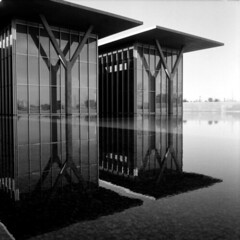
Modern Art Museum of Fort Worth
Originally uploaded by andrewlmurphy.
Found this photo of the Modern Art Museum and kind of liked it.
Wednesday, January 03, 2007

Friday, April 21, 2006
Typerotica ... Um, Wow.

Now, you would think The Virtual Typewriter Museum would be a little bit of a snooze. I mean, I love typewriters as much as the next guy, but come on
Well, I was wrong.
Turns out there was a lot more going on that just stenography and a little light clerical. There was some down and dirty going on back in the day behind the old Underwood. And this is the tame stuff. Wowza!
If more museums were like this, we wouldn't need topless bars.
There's even a book about sex and typewriters! That kind of research is almost -- almost -- enough to make me go back to grad school.